Opening Gambit
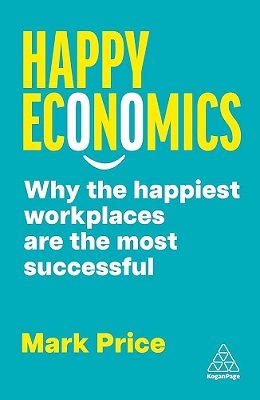
I recently had an interesting conversation with an employee at WorkL, the company dedicated to happiness at work, and used by the Sunday Times Best Places to Work run its surveys of employees. WorkL’s survey comprehensively shines a light on employee engagement and satisfaction, but Mark Price, the founder of the company, and formerly of Waitrose and John Lewis Partnership, is more motivated by happiness. In short, he wants to find out what makes employees happy.
At the start of the book, he says:
“The biggest difference any business can make is when it gets more from its people than its competitors are getting from their people.
My belief is that if people are happier at work, they give more extra discretionary efforts, work harder and for longer hours. When people have a sense of ownership and belonging and they’re happy, they work harder and a more committed, they take less time off sick, and are less likely to leave the organisation.”
Luckily, the fruitful conversation with the employee I spoke to, lead to them sending me a copy of Happy Economics, and you won’t be surprised to hear that I found it fascinating, affirming, and full of insightful takes.
In summary
Price explores a combination of his own experiences in the workplace, alongside research often from the WorkL surveys, to discuss what really matters to people at work.
He suggests that the extra discretionary effort that employees make when they are fully happy and engaged in their organisation is the difference maker, and therefore employers must improve their staff’s happiness and satisfaction to reap these mutual benefits.
The six elements that drive happiness and satisfaction at work:
- Reward and recognition: pay is important, but recognition can be a far more powerful motivator
- Information sharing: openness and transparency ensure widespread understanding of objectives
- Empowerment: empowered employees have intelligent insights about how to do things better
- Wellbeing: happier, healthier people are better equipped to do their best work
- Sense of pride: pride in the workplace adds to a sense of fulfilment
- Job satisfaction: a culture of trust and respect encourages a stronger bond.
Throughout Happy Economics, Price unpicks each of these six elements, in addition to many other factors that might influence workplace happiness, providing a combination of statistics, personal reflections, and case studies from other contributors.
Key takeaways:
- Not a great outlook for UK happiness scores: the UK fares pretty badly in the WorkL survey scores, regularly being outperformed by Europe and the US. Alarmingly, the UK has the highest flight risk (chances of employees leaving) scores in the globe, with 29%, which is amazingly 7% higher than the USA. Price discusses a lot of factors causing this, from UK workplace culture often lacking recognition and praise, to lack of management training (see ‘favourite moment’ section).
- Gen Z employee priorities: Happiness is high on the list of priorities for the Gen Z-ers, with 70% saying they would quit their job if they didn’t feel happy. 72% of them said that satisfaction and meaning are more important to them than salary. In less than six years, 1/3 of the workforce will consider happiness a defining criterion for accepting a job. Happiness and fairness will emerge as the most important business metric in the years to come, Price argues. The companies that succeed will be those that prioritise the happiness of their team.
- Staff engagement matters: Surveys showed that when staff are fully engaged, we have a 22% decrease in flight risk. A 23% increase in response rate to the surveys. A 9% increase in job satisfaction. A 10% increase in reward and recognition. And 5% increased empowerment.
- The power of the six elements: you’ll need to read the book yourself to fully explore the six elements of team happiness, but Price details each comprehensively. The takeaway is simple: people thrive when other people are supporting them. We need to create workplaces where leaders and managers set a relentless culture of support, recognition, empowerment, and where things are done deliberately: from communication to CPD. None of it was a surprise to me, and yet each bit of data, and Mark’s own reflections from the retail sector, were both affirming and challenging.
- Some eye-opening statistics: here’s a random collection that I found intriguing. Research shows that over 80% of employees think that nothing happens as a result of staff surveys. Surveys show that stress is it an all-time high, with 41% of workers saying they experience it for much of their working day. CPD is linked to job satisfaction, and WorkL surveys show that for workers in their 40s-50s, these opportunities are less prevalent. Wellbeing: one study suggested that only 5% of employees access the ‘wellbeing’ resources that firms provide, which suggests that we must look at organisational culture and trying to improve the organisation, so that we can in turn help employees, rather than look at bolt-on benefits for staff.
Favourite Quote
‘Culture is the sediment of past transactions. The way that any leader dealt with their team yesterday always has a bearing on the culture of the business today’.
Favourite Moment
Favourite is probably a strange way to define this next bit, but the part of the book I found the most fascinating, challenging, and that got my mind working, was the damning evidence about lack of training for leaders and managers and the huge impact this can have on employees.
WorkL Survey data shows that one of the greatest influences on whether anyone feels good about their day, is their line manager. The quality of this relationship singularly dictates virtually every impression of the organisation. Price discusses how line managers should check in with individuals and have regular coaching-style conversations when they ask open questions about how they are doing and how they can be supported.
In the WorkL survey, the question ‘I have a good relationship with my manager’ almost always correlates with a high overall employee engagement score. If the employee scores this question as 10/10, the overall workplace engagement score is 84%; if they score it 0/10, it falls to 27%.
We need to delve deeper into the roles of managers and provide more training and support for them to help support their employees. The Chartered Management Institute (CMI) found that 82% of people in management roles in UK Firms had never had any management training. 82%! People are not happy at work because their managers don’t have a clue how to lead teams.
UK engagement and happiness scores are among the worst in the world, and the foundation of that is that leaders and managers are not properly trained. UK has the lowest confident in management score with 73%, compared to a global average of 76%. Nobody has ever sat down with most managers and said: how do you manage people? How do you get the best from your team?
Price calls these people accidental managers – those who have bene promoted for technical competency who get promoted when a vacancy comes up – they seem to know what they are doing. But the reality is they don’t know how to look after their staff.
It reminded me of occasions I’ve seen in teaching where incredible practitioners are promoted and then expected to lead a team without much training at all, except going along to the half termly middle or senior leader team meetings. It’s made me think so much more already about how we induct, train, and continue to support leaders, through both training programmes and high-quality, deliberate line management.
Overall
Mark Price shines a light on the reality of current workplace happiness data, and provides strategies and wisdom to help improve this. I really appreciated his personal style, with first-person accounts and anecdotes, always supported by a huge body of WorkL (and other) research to underpin his thinking.
Read this if:
You are interested in organisational culture
You are a leader who wants to help your staff become more happy and engaged in their work

